
The City of Paper Houses
Some books don’t stay on your bookshelf. They quietly become part of your life.
Years ago, our dear friend Shuko-san gave me a small book she thought I would appreciate. It was called Paper House.
She knew my affection for old paper, handmade boxes, weathered objects, and the strange poetry hidden inside ordinary things. The book lived for years in the drawer beside my bed.
The book begins with Shotaro Yoshida’s decision to leave Tokyo in 2022 and return to his hometown of Kuroiso in Tochigi Prefecture after more than twenty years of running antiques tamiser in Ebisu. It isn’t written like a memoir.
It unfolds more like a collection of observations about paper, memory, and making. He writes about his love for old paper, the softened texture, the faded colors, the marks left by time. What began as a simple exercise of folding paper into houses slowly expanded into an entire village. Each house became attached to a memory, a painting, a landscape, or an image that had lingered with him.
“A house standing on a small hill.
A pump house beside a rice field.
In that town, a house with white walls.
Stone walls piled up methodically.
Houses I saw in art books and postcards.
Those were the ones I wanted to build”.

One of the houses was inspired by Andrew Wyeth’s Christina’s World. Another by an old postcard. Others by faded painters books whose colors had slowly dissolved into paper over decades.
Looking back, I realize that what I had always searched for, whether photographing quiet corners of cities, wandering flea markets, or collecting forgotten objects, existed inside this small book. It gave shape to something I had felt but had a found difficult to articulate.
So when Riley, Shuko-san, and I finally found ourselves in Japan together, visiting Kuroiso became one of the places I most wanted to see.
I wasn’t sure what to expect.
In my mind I imagined a sleepy agricultural town surrounded by rice fields.
Instead, Kuroiso reminded me of Marfa, Texas.
Small cafés tucked into old buildings. Independent bookstores. Florists. Tea shops.
Spaces made by people who had chosen a slower rhythm.
.jpg)
Then we arrived at Antiques Tamiser.
Before we even walked inside, I could see Shotaro through the front window.
He was seated in a small office flooded with soft afternoon light, working on one of his paper houses.
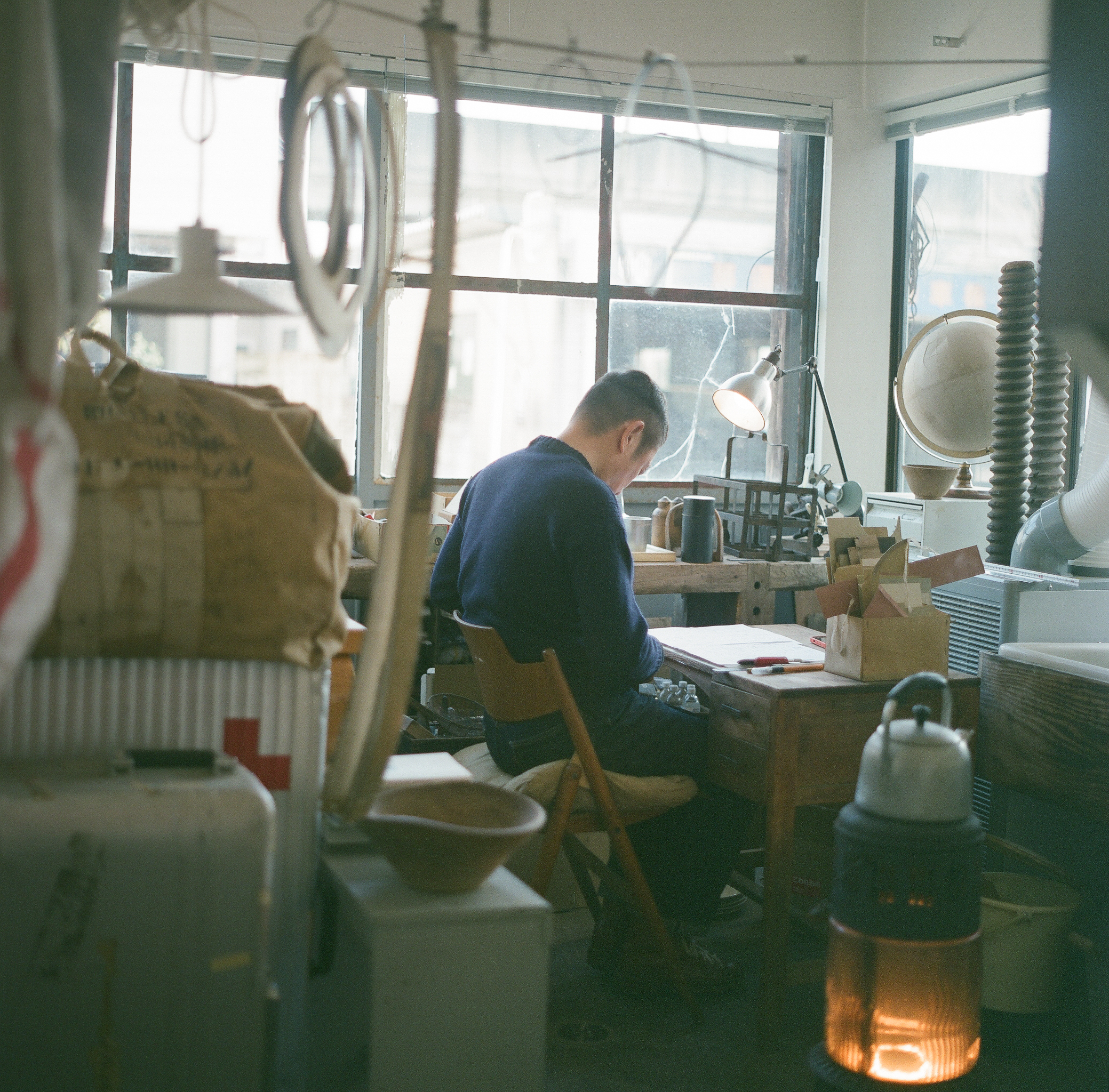
Walking into the shop felt like stepping inside the book that had lived beside my bed for years.
Dusty wooden display cases.
Paper boxes worn smooth by time.
Old enamel plates.
Books with faded linen bindings.
Bird cages whose purpose had long disappeared.
Nothing announced itself.
The objects simply existed together, each carrying a history that was never explained but somehow deeply felt.
We were greeted warmly by Midori Takahashi, Shotaro’s wife, who welcomed us into the space. I wished I could have spoken directly with her, but thankfully Shuko san translated. She explained how much Paper House had meant to me over the years and how impossible it felt that I was finally standing inside this place.
Like much of Japan, the shop did not allow photography.
I understood.
Some places ask to be experienced rather than documented.
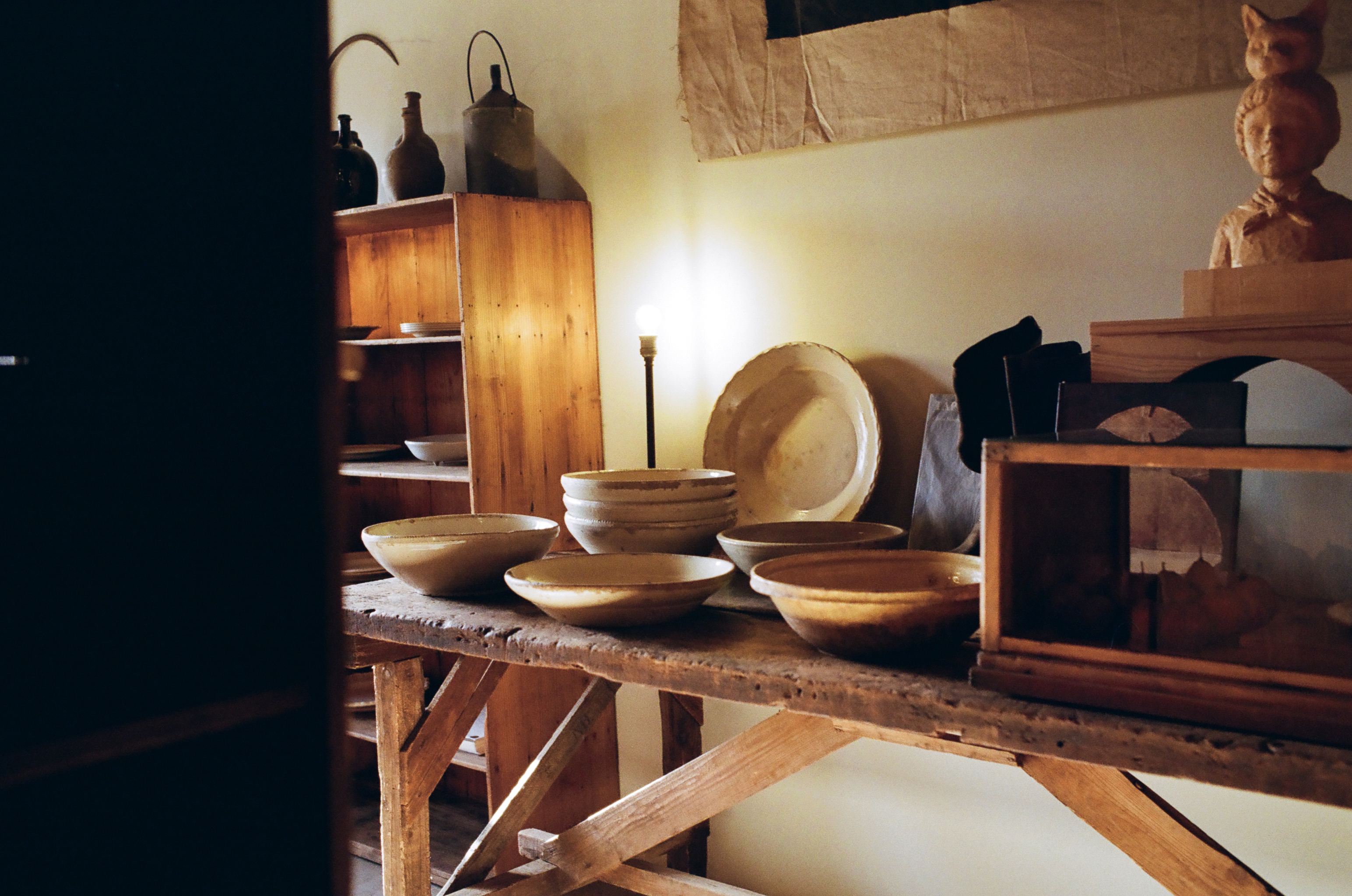
A few minutes later Shotaro emerged from his studio. Soft-spoken and generous, he welcomed us and quietly guided us toward a smaller room separated from the rest of the shop. Inside were several of the original paper houses from the book.
Beside them hung a photograph of Andrew Wyeth.
The light bounced across old silver and weathered wood in a way that made every instinct inside me want to reach for my camera.
But of course out of respect, I didn’t.
As we prepared to leave, Shuko-san spoke with Shotaro.
She explained that photography was an important part of my own practice and how much his work had influenced me.
I’m not sure whether it was Shuko’s kindness, the old Hasselblad I carried, or simply his generosity in that particular moment, but Shotaro made an exception.
He told me that this space was not simply a shop.
It was an extension of his practice.
He entrusted me with photographing it and that trust meant more than the photographs themselves.
.jpg)
Rather than documenting the shop, I tried to photograph it the way I imagine Shotaro assembled it not by recording everything, but by searching for what felt essential.
Only later did I realize that the visit had quietly clarified something I had been trying to build through Casa Ysasi.
Whether through the gallery, the studio, the walls we’ve built, the furniture we’ve designed, the objects we’ve collected, or the dinners we’ve hosted, none of it has ever been about individual projects.
It has always been about creating a way of living.
I often return to Arthur Miller’s line:
“The aim of life is to make living an art.”
Nowhere has that idea felt more tangible than in Japan.
What I admired wasn’t simply Shotaro’s ability to collect beautiful things.
It was his ability to notice.
To recognize meaning before anyone else did.

Some artists work reminds us that poetry doesn’t belong exclusively to language.
It can exist in a room.
In the placement of a chair.
In the texture of old paper.
In the distance between two objects on a shelf.
There is a quiet discipline in paying attention to ordinary things until they reveal themselves. I have begun to think that this discipline is itself a form of poetry.
In movies every movement of the camera, every shift in light, every sound, every cut directs our attention toward meaning. Thousands of small decisions made by the team combine to reveal the poetry already present in everyday life.
In a world increasingly designed to steal our attention, erase history, and encourage constant consumption, a small antique shop in Kuroiso quietly offers another possibility.
A slower life.
A life where objects are allowed to age.
Where noticing becomes an art.